If want to see the complete version of my portfolio, please check the link and see the full working sample.
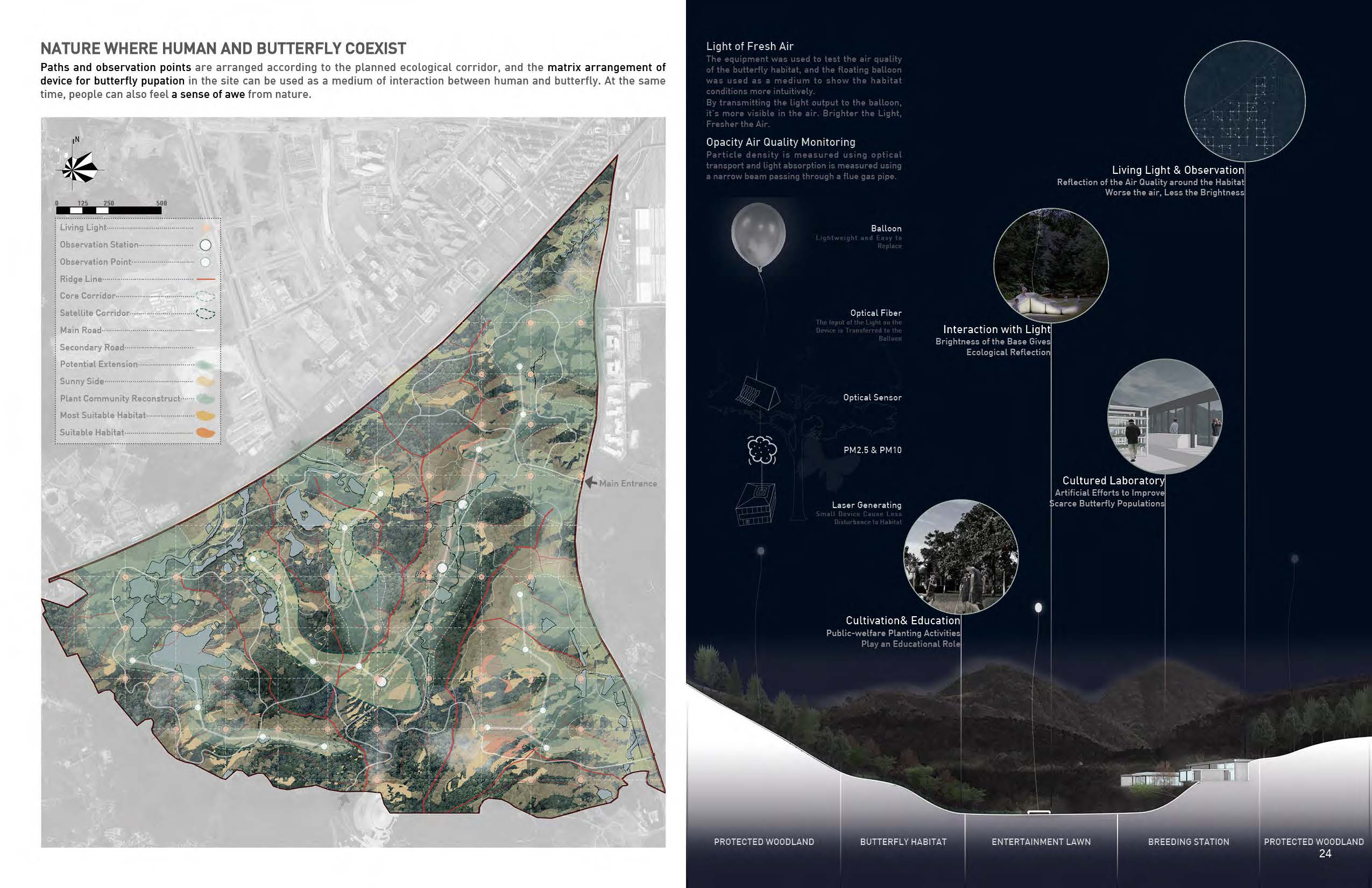
Since the outbreak of COVID-19, the social distance kept between each other seems to become the new norm of life. In the mid-summer of 2020, I went out to a park and lay down on the open sloped lawn. I felt that I was no longer a spec of sand in isolation. At that moment, I realized that the environment that I had taken for granted had, in a subtle way, provided so many windows to connect with the world, and there were more subjects in the world sharing this beauty together.
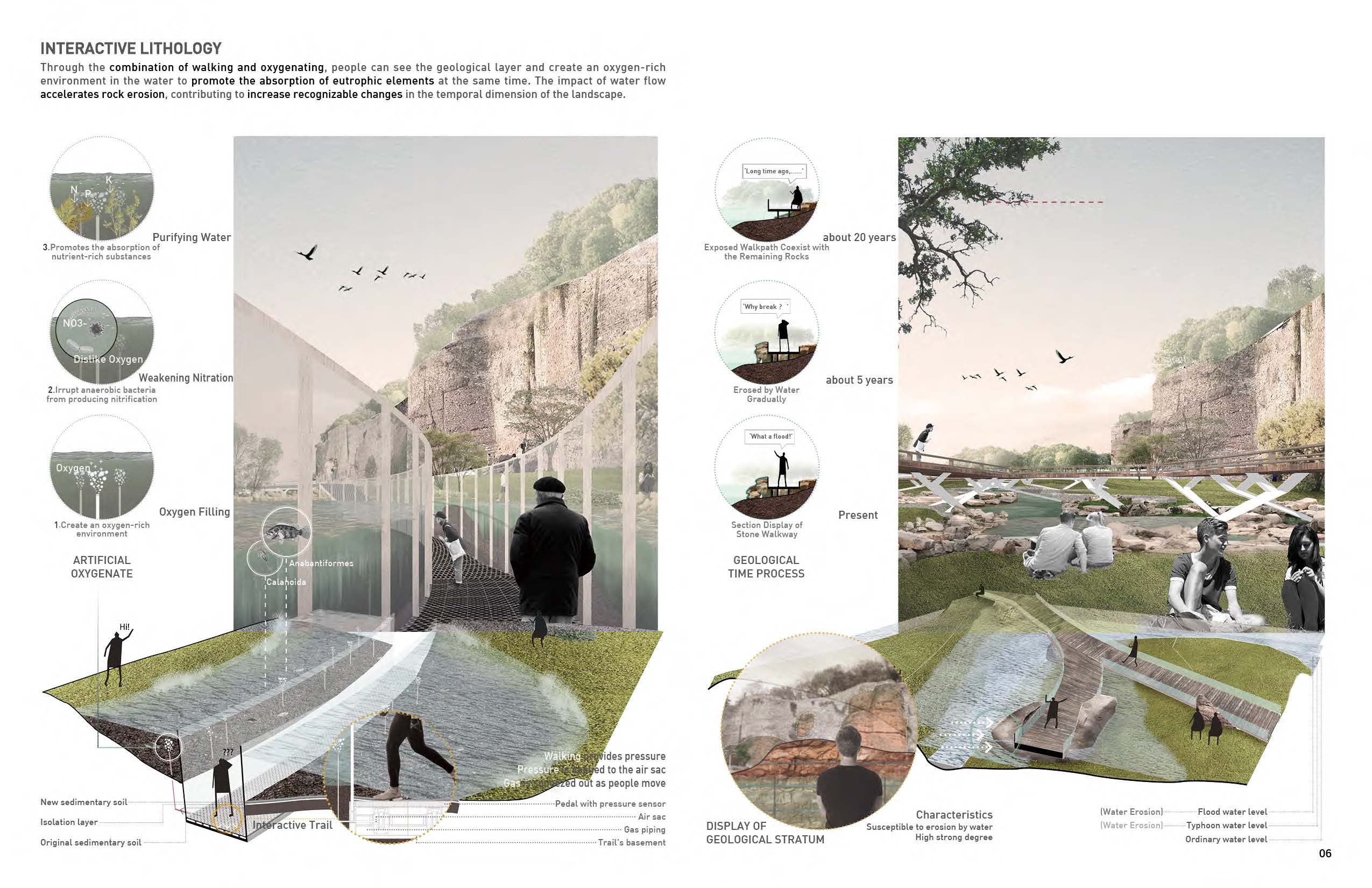
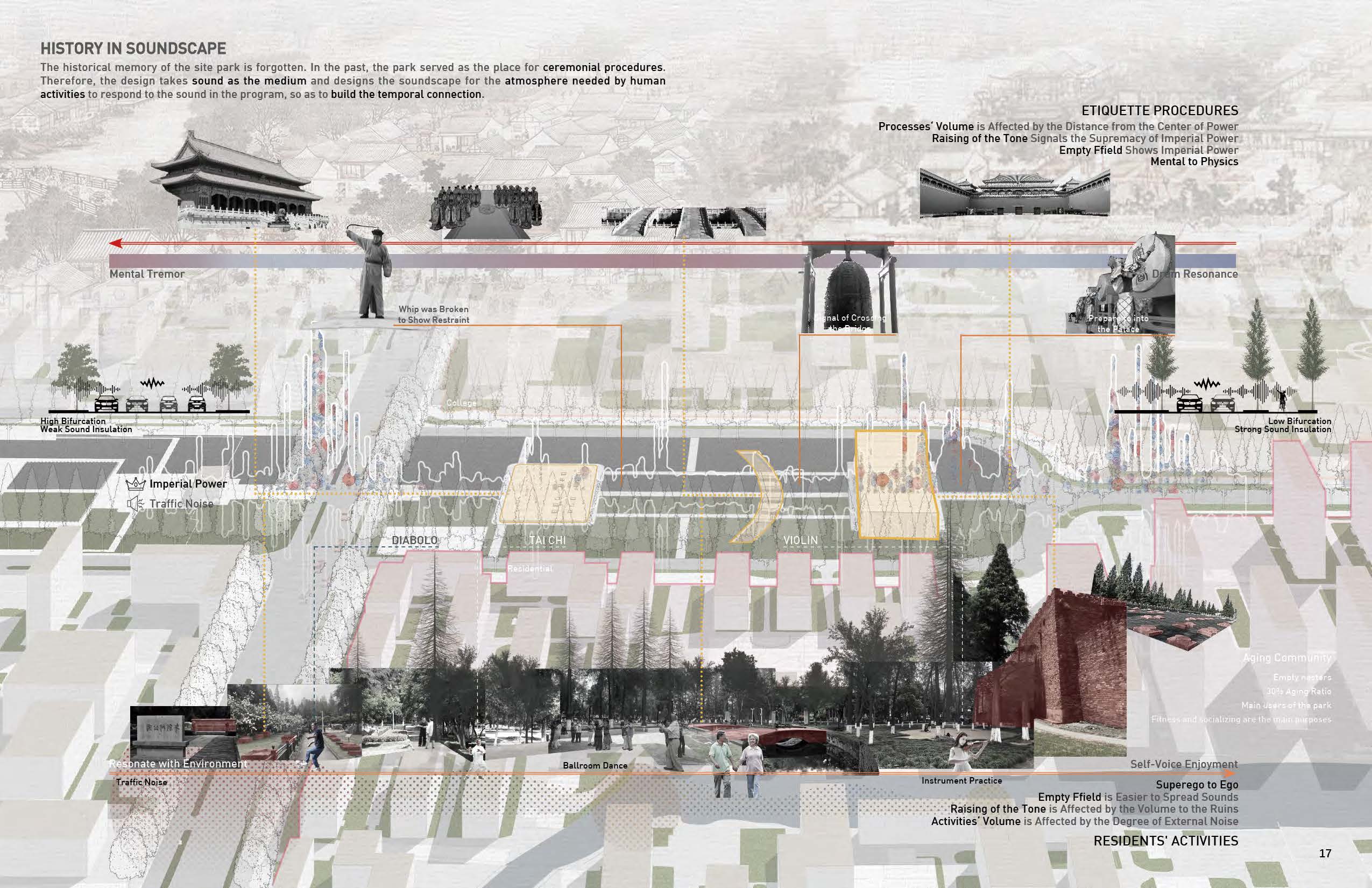
As a medium, the landscape provides the possibility of sharing stories in a temporal dimension. the landscape in this process is like a window that builds up a temporal connection, reflecting the transparent superimposed relationship of different historical processes. My hometown’s 3000 years historical memory has been lost in the washout of commercialization. The urban renewal should not simply function as a fresh new sheet, but a palimpsest, an overlay of new and old footprint, so that the future can have the opportunity to dialogue with the past through the gap between the layers. Therefore, in the design of the Palace Ruins Park, through the secondary transformation of the sound generated by the users’ activities at present, I built a temporal connection with the sound generated by the ritual procedures that took place in the past palace, and therefore reveal the transparency of the site in the temporal dimension.
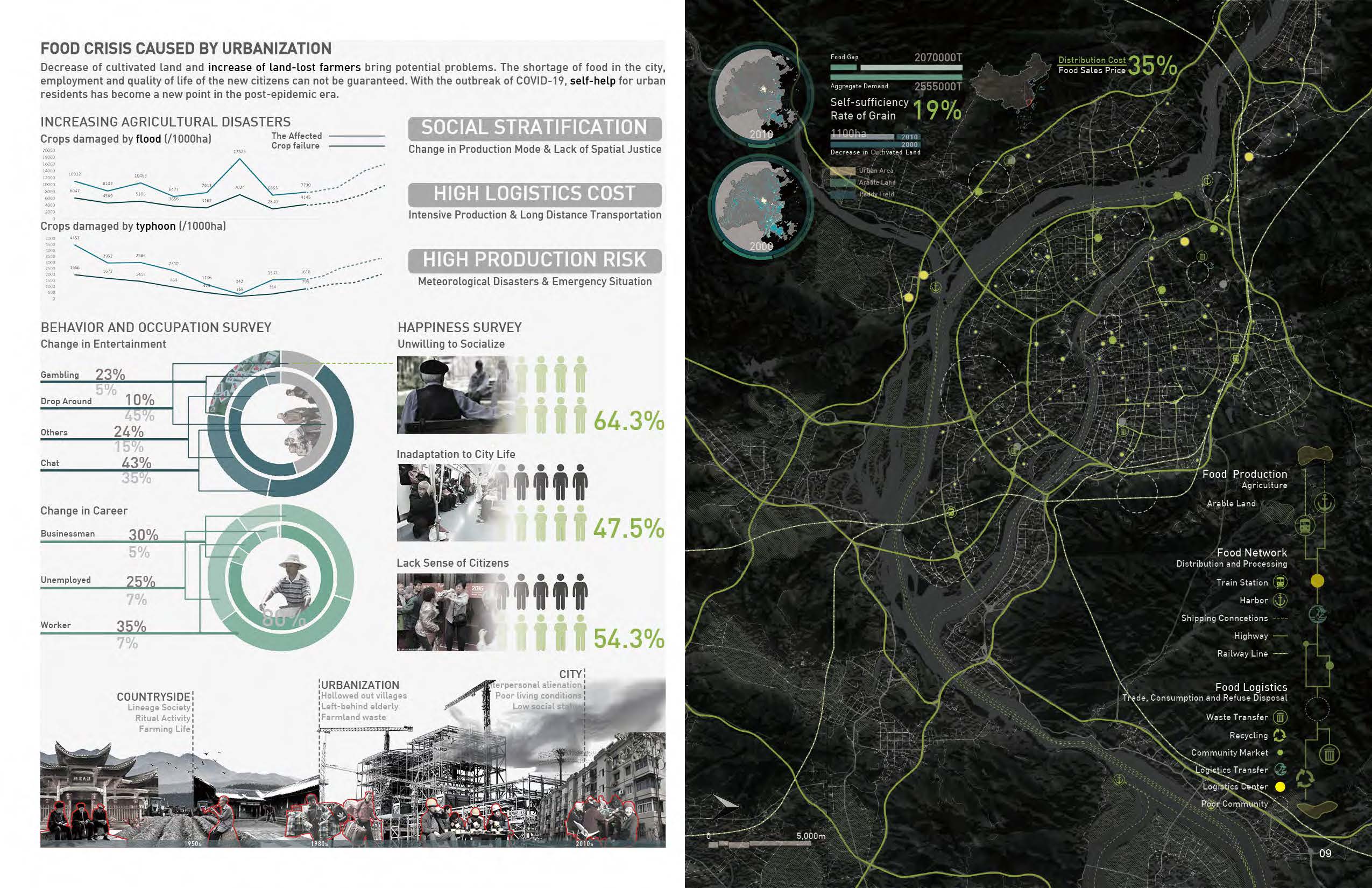
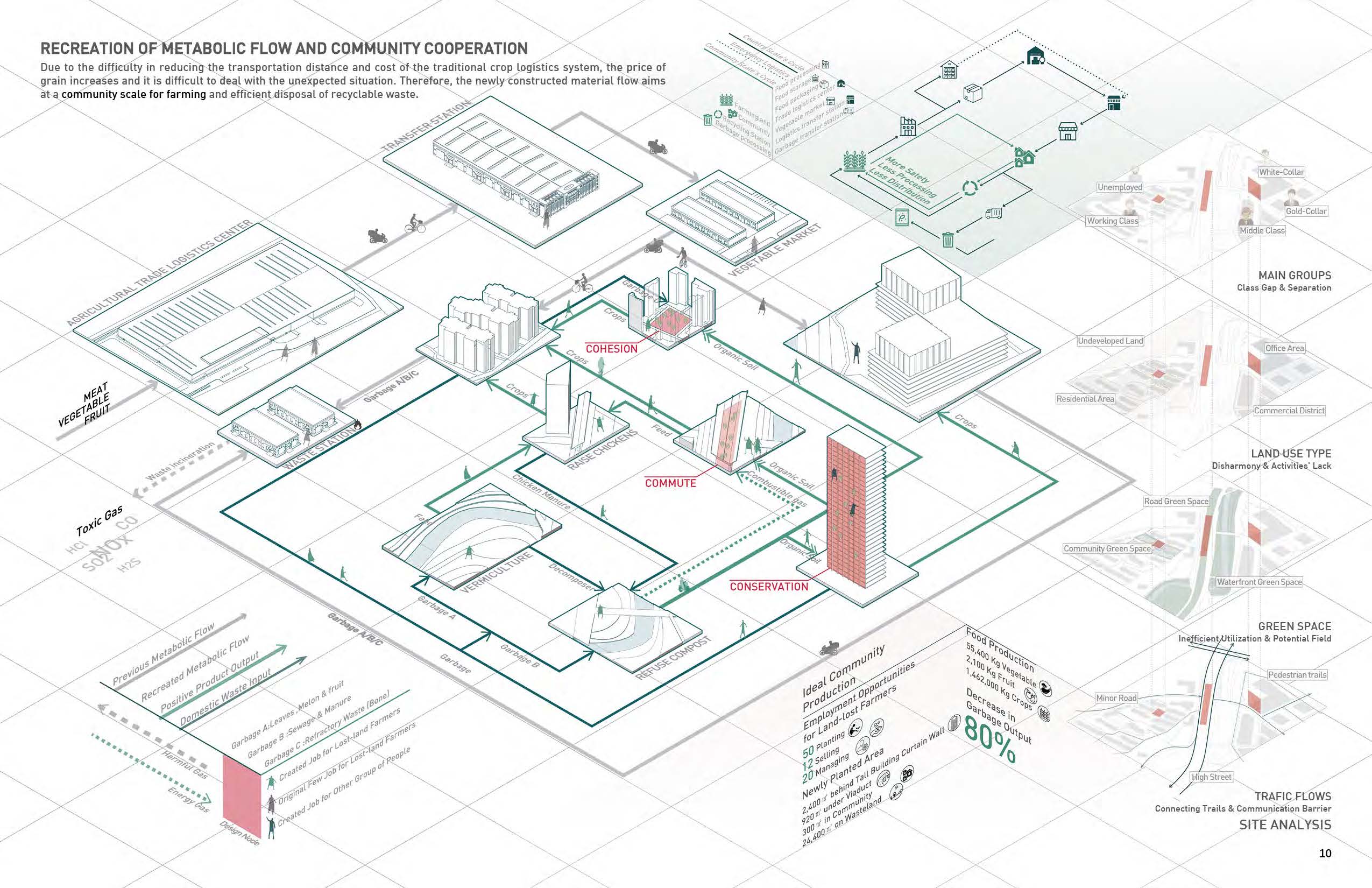
Likewise, landscape as a medium offers the opportunity of sharing space and function for different users. Unfortunately, during urbanization, the social stratification of the landscape is happening inexorably. In the present day, all participants in urban activities have unconsciously become recipients of that information, leading to the spontaneity of the people involved in public activities. In the project on urban agriculture, I learned that rural community has lost their farming land during urbanization and gentrification. More and more vulnerable groups lost their right to live freely and had to follow the direction of the social hierarchical order implied by the established space. The rediscovery of the existing urban space should give a new meaning to the public space that was considered as low value. By combining urban agriculture and transportation trails, I created re-employment for lost-land farmers and offered the possibility of a space for all people to engage in activities that eliminate class differences.
My academic experience in landscape has provided me a chance to reflect on the drawbacks of my home city’s development. I always remember the delightful memory of weekend hiking and the pure environment when I was a kid. Meanwhile, I will never forget the children’s running and climbing in the temporary installation that I constructed, which reminds me what contribution I can make to society. In the future, my goal is to go back to my home city and create public space without class differences and time limits.